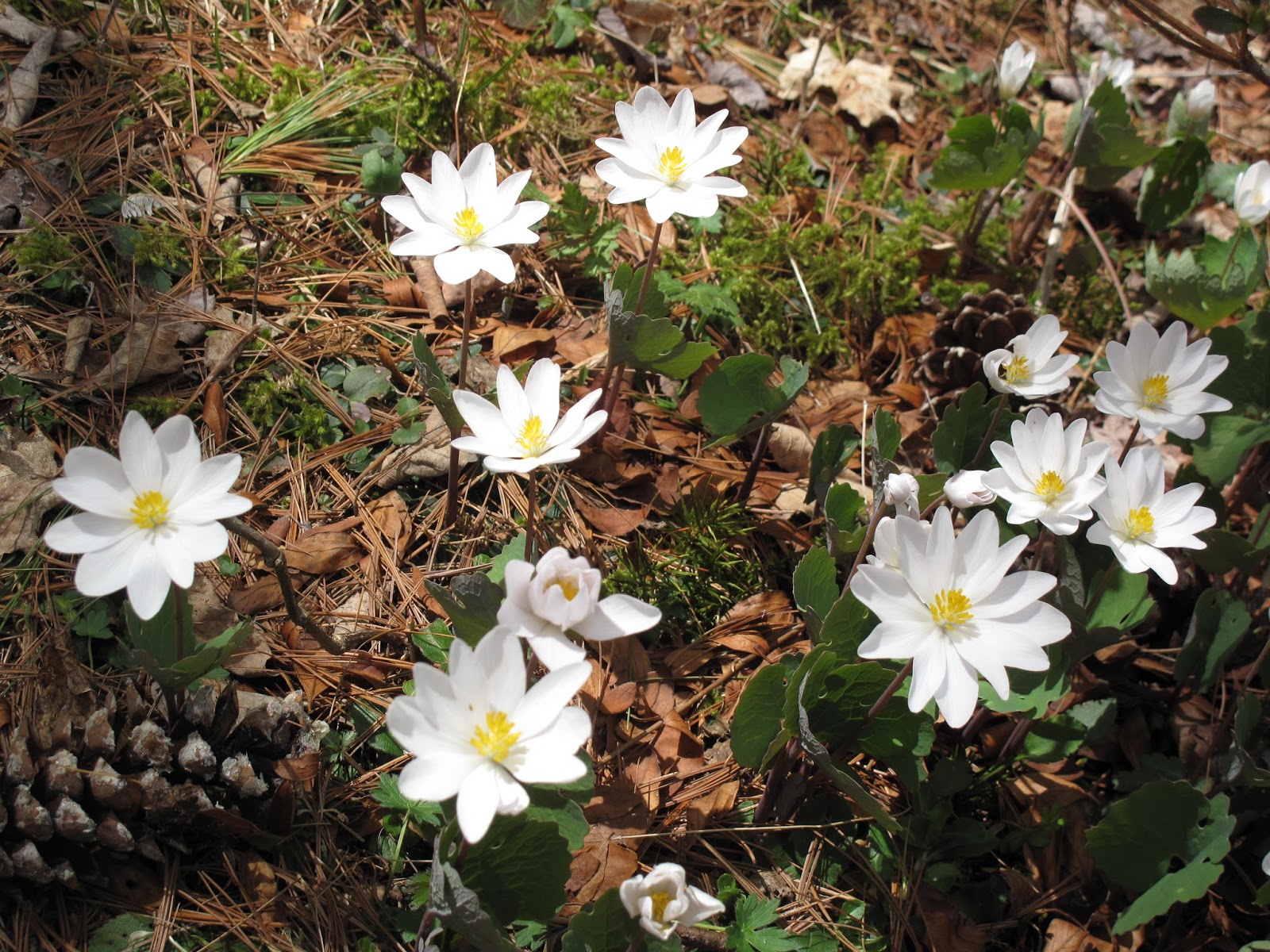
| Bloodroot |
| Wild onion |
![]() |
| Wild onions (2010 photo) |
| Wild Leeks (Ramps) |
| Bloodroot |
| Wild onion |
![]() |
| Wild onions (2010 photo) |
| Wild Leeks (Ramps) |
| "North Pole" Lettuce |
![]() |
| Hoophouse (Feb. 16) |
| High Tunnel Spinach (March 9) |
![]() |
| Carrots and radishes dug from the hoophouse (March 9) |
![]() |
| Low tunnels protected only by a single row cover (March 29) |
![]() |
| Low Tunnel Tatsoi (March 29) |
![]() |
| Low Tunnel Mache (March 29) |
![]() |
| Low Tunnel Spinach (March 29) |
Richard’s dad, Roy, was reminiscing yesterday about eating nuts on Christmas Day when he was growing up. So after some searching, we found the nutcracker that I was sure I had and dug into our first crop of filberts (or hazelnuts) after dinner last night.
The nuts were small, as we planted the species, rather than an “improved” variety, but delicious.
Other benefits: Filberts are easy to grow, requiring no maintenance other than occasionally cutting back some of the suckers from the base. The nuts mature in September, and by Oct., the leaves glow with striking shades of maroon, red and orange, making them high on my list of edible landscape crops. Some grow them as a small tree. We allow them to sucker – less work! – and grow as a large shrub.
We’ve been clearing out some of the pines behind the house this winter, opening up the woods edge, and plan to fill in with small nut trees and berry shrubs. More filberts will definitely be among them. But I’m counting on the squirrels and chipmunks to help repopulate this native plant throughout the area with the portion of their cache they neglect to dig up. All we’ll need to do is find them and share in the harvest.
Butternut, Blue Hubbard, pumpkin harvest (Oct. 2011)
I grew Blue Hubbard squash this year for the first time. My only previous encounter with this large winter squash was about 30 years ago, when a housemate in a vegetarian co-op I was living in at the time stuffed a Blue Hubbard squash instead of a turkey for Thanksgiving. My memory was of a huge, unattractive gourd that filled the center of the table and required a dozen people to consume.
But I read in the Fedco seed catalog last winter that Blue Hubbards, grown around the perimeter of a squash bed, serves as a trap crop for squash beetles, protecting the plants on the interior. The beetles did seem to prefer the large Blue Hubbard blossoms, making it easier to hand-pick them. And huge they are. – both the vigorous plant which snaked it’s way across the yard, and its massive fruit. But I would continue to grow it regardless. The ugly exterior hides gorgeous orange flesh as sweet and tasty as Butternut.
And in terms of quantity of food for the winter, Blue Hubbard is a boon. I forgot to weigh the largest of the squashes before we cut it up and baked it, but we had 7 pounds of edible flesh when we were done. As for the dozen people I thought we’d need to eat it – we simply mashed and froze it in reasonable sized containers.